No products in the cart.
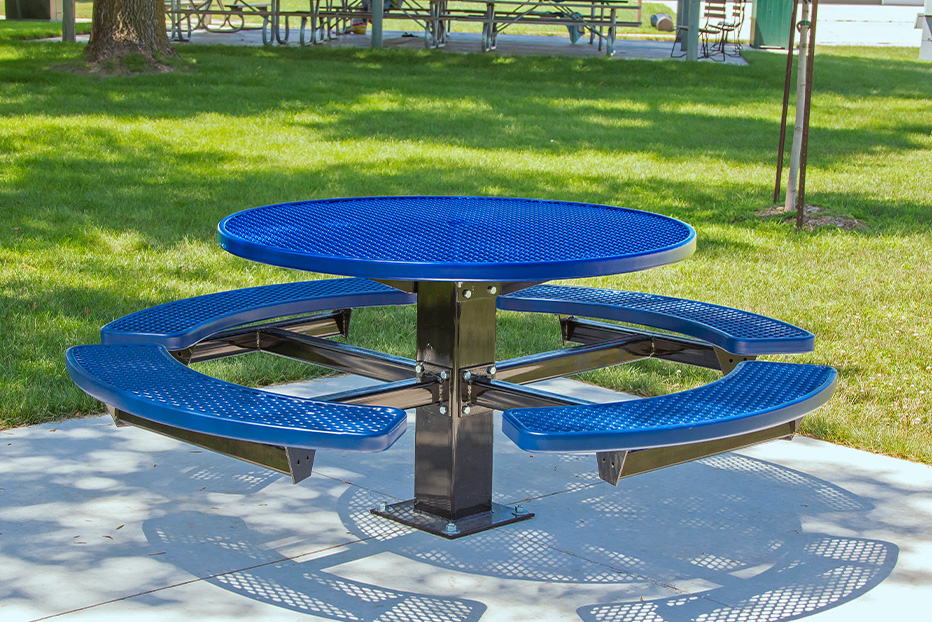
Selecting the right picnic table for your facility is more than choosing a size and color. Whether you are outfitting a municipal park, upgrading a school courtyard, or enhancing a hospitality property, the materials, frame construction, coatings, and mounting options you select will directly impact durability, maintenance requirements, and long-term value.
At Kay Park, we understand that every site has unique demands. From high-traffic public parks to low-maintenance hospitality patios, choosing the correct combination ensures your investment performs for years to come. This guide will walk you through the key components to consider when planning your next picnic table purchase.
The material you choose for the tabletop and seats plays the largest role in appearance, comfort, durability, and maintenance. Each option offers distinct advantages depending on your environment and expected use.
Aluminum picnic tables are a long-standing favorite in parks and recreation settings. Lightweight yet strong, aluminum resists rust naturally and performs well in varying climates. It’s easy to clean, making it ideal for high-use public areas where quick maintenance is essential. Because aluminum reflects heat rather than absorbing it, it can remain more comfortable in sunny environments compared to darker materials. These tables are commonly used in schools, ballfields, and community parks where durability and low upkeep are priorities.
Best suited for: Public parks, athletic facilities, school campuses, and coastal environments.
For those seeking a traditional and natural aesthetic, treated southern yellow pine offers warmth and familiarity. Pressure treatment helps protect the wood from rot, insects, and moisture, making it suitable for outdoor use. Wooden picnic tables are often chosen for campgrounds, nature centers, and rustic park settings where blending with the natural surroundings is important. While they may require periodic sealing or staining to maintain their appearance, many facilities appreciate the classic look and approachable feel they provide.
Best suited for: Campgrounds, nature trails, state parks, and scenic outdoor settings.
Fiberglass tabletops provide a sleek, smooth, and highly durable surface that is resistant to moisture and staining. The non-porous design makes cleaning simple, which is especially valuable in hospitality environments or food-service settings. Because fiberglass does not splinter or absorb moisture, it holds up well in areas exposed to frequent rain or humidity. Many waterparks, theme parks, and poolside facilities prefer fiberglass for its easy maintenance, polished appearance, and vibrant color options.
Best suited for: Waterparks, theme parks, aquatic facilities, and high-cleanliness environments.
Recycled plastic picnic tables are engineered for longevity. This material is resistant to moisture, insects, cracking, and fading, making it one of the most low-maintenance options available. Unlike wood, it does not require sealing or staining, and unlike metal, it will not rust. In addition to durability, recycled plastic supports sustainability initiatives, making it a popular choice for municipalities and environmentally conscious organizations. The material’s solid construction provides a substantial, stable feel while maintaining long-term color retention.
Best suited for: Municipal parks, playgrounds, long-term public installations, and eco-focused developments.
Vinyl plastisol is a coated steel option that adds a thicker, protective, slightly cushioned layer to expanded metal seating and tabletops. The coating creates a smooth, comfortable surface while sealing the metal beneath to prevent corrosion. This material is frequently selected for playgrounds and schools because of its durability and comfort.Best suited for: Schools, playgrounds, public parks, and family-oriented spaces.
Thermoplastic tables offer many of the same durability benefits as vinyl plastisol but is a thinner coating that provides exceptional adhesion and long-term resistance to peeling or cracking. Thermoplastic finishes hold up well under heavy traffic and extreme weather conditions. The protective coating seals the steel beneath, preventing rust while maintaining color integrity for years. This makes thermoplastic a dependable solution for demanding public environments.
Best suited for: High-traffic municipal parks, recreation centers, and urban outdoor spaces.
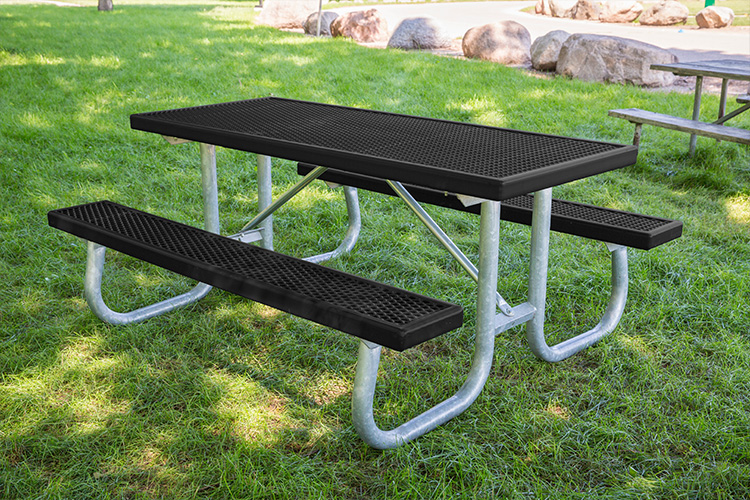
While the tabletop gets the most attention, the frame is the structural backbone of your picnic table. Selecting the appropriate frame coating ensures your table can withstand years of exposure to weather and heavy use.
Powder coating provides a smooth, durable finish that enhances both protection and visual appeal. The coating is electrostatically applied and cured under heat, forming a tough outer layer that resists chipping, scratching, and corrosion. Powder coated frames are ideal for properties seeking color customization or cohesive design aesthetics. When properly maintained, they offer strong resistance to weather and wear.
Best suited for: Hospitality properties, campuses, and locations prioritizing coordinated color schemes.
Galvanized frames are coated in a protective layer of zinc, typically through a hot-dip galvanizing process. This coating provides exceptional corrosion resistance, even in harsh climates or areas with heavy moisture exposure. Galvanized steel is often chosen for its long-term durability and minimal maintenance requirements. It is especially beneficial in coastal regions, humid climates, and public parks where long service life is critical.
Best suited for: Coastal parks, municipal installations, and long-term public projects.
The way a frame is assembled impacts structural integrity and long-term stability.
Bolted frames allow for easier replacement of individual components if needed. They tend to be lighter weight, offering flexibility for facilities that may reconfigure spaces over time. This option is commonly selected when future layout changes are anticipated or when ease of part replacement is important.
Best suited for: Schools, adaptable community spaces, and facilities anticipating reconfiguration.
Welded frames provide a rigid, unified structure with fewer connection points. This construction style often increases overall strength and reduces the potential for loosening hardware over time. For high-traffic or permanent installations, welded frames offer additional durability and stability, making them an excellent long-term investment.
Best suited for: Public parks, permanent installations, and high-use environments.
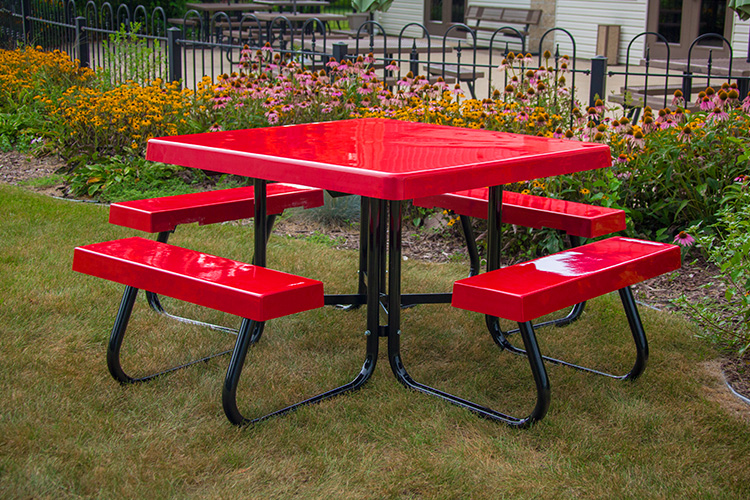
Mounting style affects safety, stability, and flexibility. Understanding how your tables will be used helps determine the best option.
Portable picnic tables offer flexibility and convenience. They can be rearranged for events, moved for cleaning, or repositioned seasonally. However, they may not be ideal for unattended public spaces due to the risk of relocation or theft.
Best suited for: Event venues, hospitality patios, and supervised environments.
In-ground mounted tables provide maximum stability by anchoring support posts directly into concrete footings below ground level. This installation method deters theft and prevents movement, even in high-traffic areas. This mounting option is especially beneficial for parks and trails where long-term placement is desired.
Best suited for: Municipal parks, trail systems, and permanent outdoor developments.
Surface mounting allows frames to be directly bolted to existing concrete pads or secured using mounting brackets. This method provides strong stability without the need for excavation. Surface mounting is often selected for plazas, sidewalks, and paved patios where a secure installation is needed but in-ground placement is not practical.
Best suited for: City streetscapes, paved park areas, campuses, and commercial properties.
Choosing the best picnic table requires balancing aesthetics, durability, maintenance, and long-term investment value. By carefully considering materials, frame coatings, construction styles, and mounting options, you can create an outdoor space that is both functional and welcoming.
At Kay Park, we design and manufacture picnic tables that meet the demands of parks, schools, hospitality properties, and public spaces nationwide. Whether you need a low-maintenance recycled plastic table for a municipal park or a fiberglass table for a hospitality patio, our team is ready to help you select a solution built to last.
Investing in the right picnic table today ensures your outdoor spaces remain durable, attractive, and inviting for years to come.
Kay Park Recreation
1301 Pine St.
Janesville, IA 50647
Phone: 866-741-8266


Copyright © 2025, All rights reserved.